Facts About Akureyri That Will Surprise You
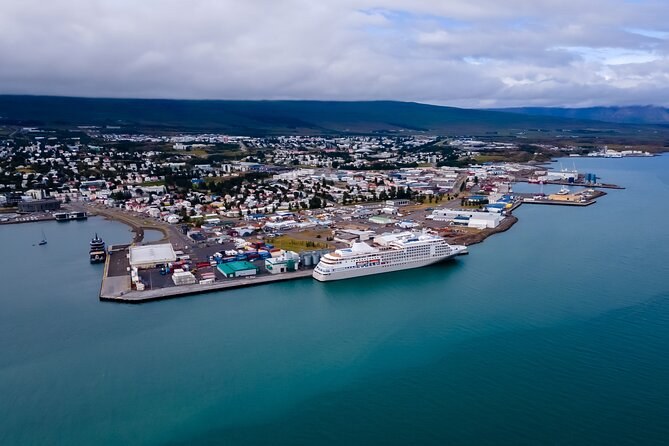
The short answer. Akureyri is small, about about 20,000 people, and it packs in more than its size suggests. Its traffic lights show red hearts. Its buses are free. Its botanic garden is older than the church. And the Arctic Circle, which many visitors expect to find here, passes an island well to the north. Here are the facts that surprise people most, each with what it means for your visit. Seeing them on Akureyri city tour is easy; most are on foot.
The red lights are hearts
Stop at a crossing in the centre and the red light is a heart. The hearts date from 2008. That autumn, as the financial crisis hit, the town ran a campaign called Smile with Your Heart, and the hearts stayed. There is even a “selfie traffic light” near Hof, set somewhere safe for photographs, with the church behind you.
That autumn a heart roughly the size of a football field also lit up on the mountain across the fjord. It has been dark for some years now, so do not go looking for it. The hearts in the traffic lights are the ones you will see, at almost every crossing in the centre.
The buses cost nothing
Every town bus within Akureyri is free. You do not need a ticket or a card. They run about 06:30 to 23:00 on weekdays and 12:15 to 19:00 at weekends, looping from the stop in the centre. That puts the pool and the outer hotels within reach without a taxi. Our visitor guide has the routes.
The fjord is the longest in Iceland
Eyjafjörður runs 60 km from the open sea to the town. That length is why the whale boats here sail all year: the regional tourist board describes the fjord as a place for boat trips in every season. Humpbacks, minke whales and dolphins feed in it, and occasionally a blue whale comes in.
It also means a trip from town to the mouth of the fjord takes time. The classic whale ship is sold as two and a half to three and a half hours because the boat goes where the food is.
The garden is older than the church
The botanic garden, Lystigarður, opened as a park in 1912. Its botanic section followed in 1957. It covers about 3.6 hectares, 40 to 50 m above the sea, at 65 degrees north. It is open all year and free.
Akureyrarkirkja, the church at the top of the steps, came later. Guðjón Samúelsson designed it, and it was consecrated in 1940. Walk from one to the other; they are close together on the hill above the centre. Our things-to-do page has the garden’s hours.
The Arctic Circle is not here
Many visitors assume the town sits on the Arctic Circle. It does not. In Iceland the Circle crosses only Grímsey, a small island well to the north, and even there it is moving.
- It first crossed the island in 1717, and has stayed on it since 1750.
- It drifts north about 1.5 km a century.
- It should leave the island between 2031 and 2038, and be clear of it by 2047.
If standing on the line matters to you, go soon. The ferry leaves from Dalvík, north of town, and takes about three hours each way.
The water at the lagoon came from a tunnel
Forest Lagoon, across the fjord, exists because of a road. The hot water was found while the Vaðlaheiðargöng tunnel was being bored under the mountain. Today it fills two pools at 37 °C. A ticket with towel and drink costs $80.
A lake day includes a cave nobody bathes in
Grjótagjá, near the lake, was a favourite bathing cave. Volcanic activity between 1975 and 1984 heated the water, and bathing ended. Every lake day still stops there so you can look in. The lake day, stop by stop explains each stop.
The lake an hour east is named for an insect
Lake Mývatn means midge lake. On a still summer day you will see why: clouds of midges gather along the shore, and they get everywhere. A head net costs little and saves your visit. The lake day, stop by stop tells you where they are worst.
A waterfall took the old gods
Goðafoss, about 40 minutes east of town, is named for the gods. The story is that a lawspeaker threw the carved pagan idols into it after the country took up Christianity. It is 12 m high and 30 m wide, and every lake day stops there.
You can bathe until nearly midnight
The lagoon across the fjord stays open until midnight, and you can stay in the water until 23:30. On a clear winter night, you can lie in hot water under a dark sky. Nobody can promise you the northern lights, but the late hours give you a chance.
The town counts its birthday
Akureyrarvaka, the Cultural Night, falls on the weekend closest to 29 August, the town’s founding date. If you are here in late August, you get the whole centre in the street. When to visit lists the other events by month.
December has no sunshine to speak of
By the Met Office’s long-term averages, Akureyri logs almost no hours of sunshine in December. In June the sun barely sets, and you get close to 24 hours of daylight around the solstice. Plan your days by that swing.
| Month | Mean temperature | Sunshine hours |
|---|---|---|
| January | −2.2 °C | 7 |
| June | 9.1 °C | 177 |
| July | 10.5 °C | 158 |
| December | −1.9 °C | 0 |
Those figures are 1961 to 1990 averages; recent decades run about a degree warmer. The weather page has every month.
Up to 200 cruise ships call in a year
For a town of about 20,000, the port is busy. It takes up to 200 cruise calls a year, and the largest ship to visit so far was the MSC Meraviglia. On a big ship day you will notice it: the harbour fills, and the whale boats and lake days sell out first. If your dates are flexible, check the cruise calendar before you book, and aim for a quieter day.
Christmas never closes
Ten minutes’ drive south of town, the Christmas Garden is open every month of the year, from June’s long days to the dark of January. There is no bus, so you need a car or a taxi. It is a curious detour if you are driving south anyway, and a sure hit with children.
You can soak on a beach
At Hauganes, the fishing village 25 minutes north of town, hot tubs sit on the beach at Sandvíkurfjara. Pair them with the village whale boat and you get a sailing and a soak in one trip. You drive there yourself.
The coast road has its own name
The Arctic Coast Way is Iceland’s first official touring route. It runs 900 km along the coast and peninsulas of the north. If you are driving on from Akureyri, you are already on part of it.
The ice cream shop is an institution
Brynja, on Aðalstræti in the Old Town, is described by the tourist board as one of the oldest and most popular ice cream shops in Iceland. It is a short walk south of the centre, on the way to the town museum.
Ways to see the town in a few hours
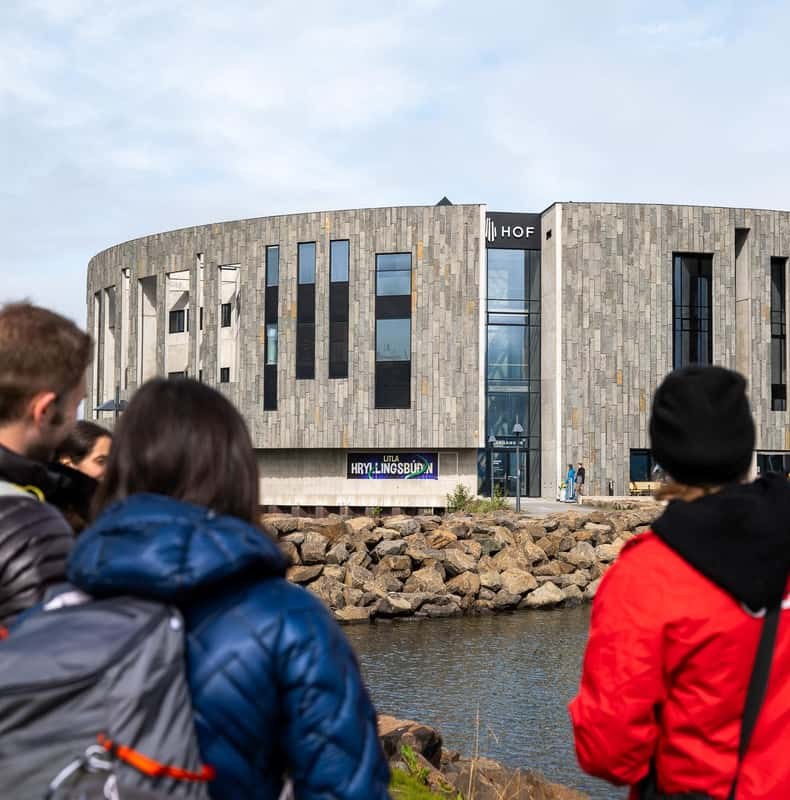
Akureyri: City Walk with Local Food
Three hours around the centre with a local guide and food at two restaurants, from the harbour or the cruise port.
From $131 per person
Check Availability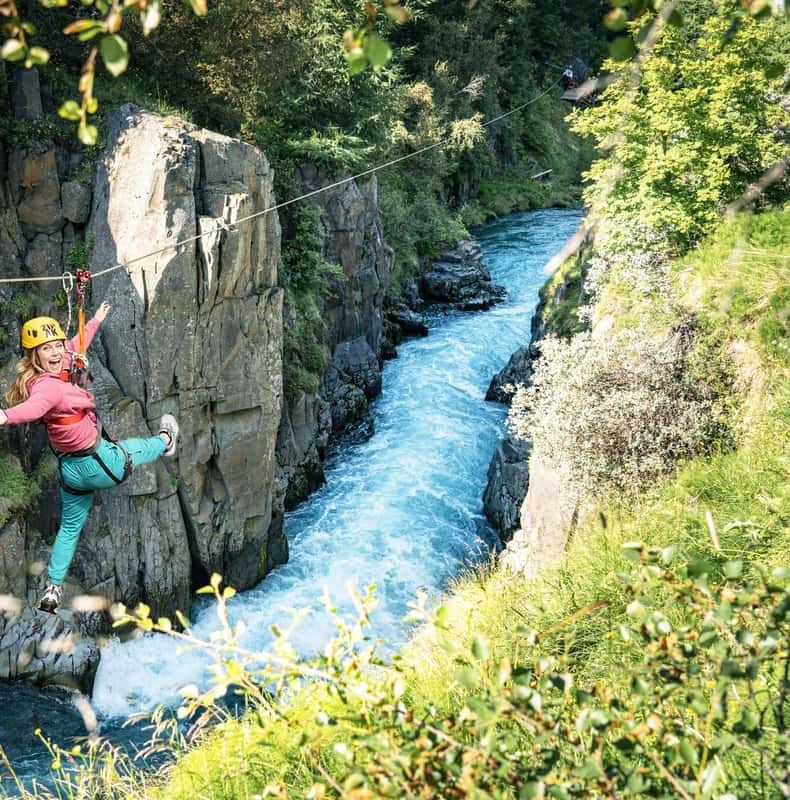
Akureyri: Zipline Tour
Ninety minutes in the canyon that runs through town: five ziplines, a safety briefing and all the gear. Ages 8 and up.
From $95 per person
Check Availability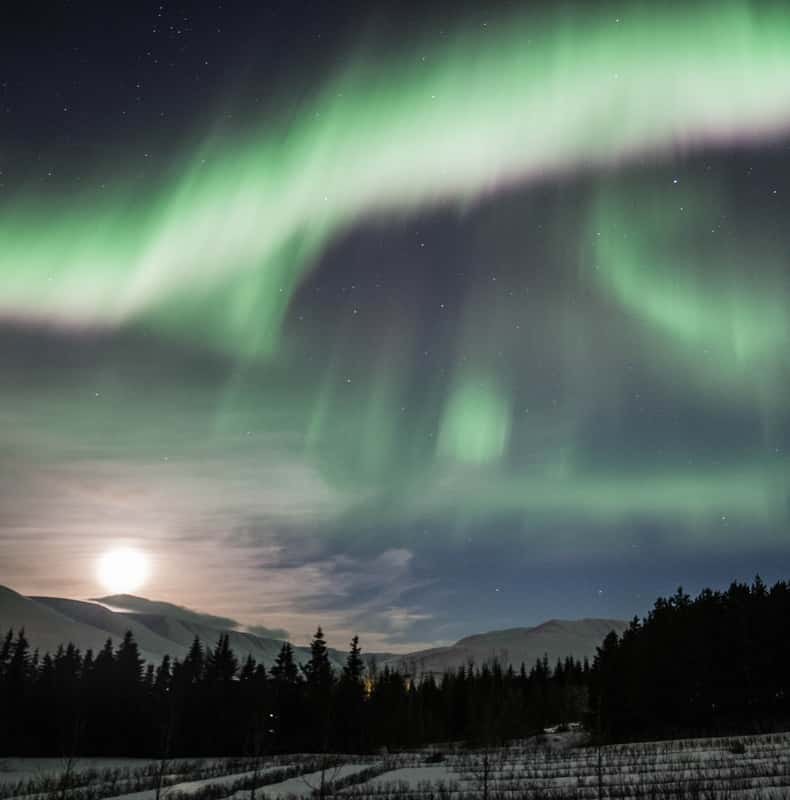
Northern Lights Tour from Akureyri
Three hours in a heated van with pickup in town, a guide who picks the dark sky, and a second night free if nothing shows.
From $113 per person
Check AvailabilityNext: Travelling with children? The age rules, set out by age saves you a wasted booking. For the free list in full, read the town without a tour. Every fare sits side by side on Akureyri Iceland Tours.